
Oxytocin and neuropeptides in research
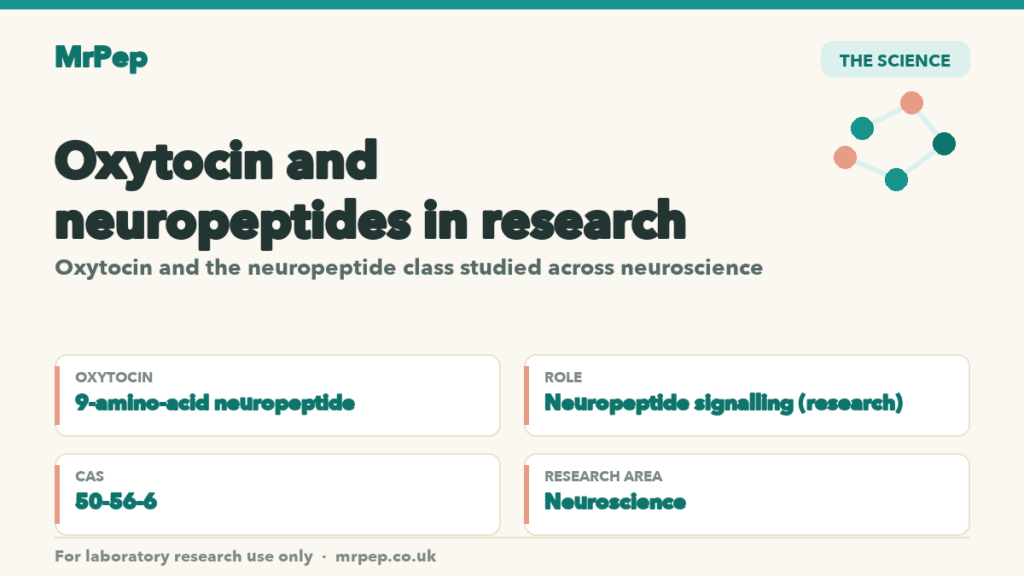
Neuropeptides are short peptides studied as signalling molecules in the nervous system, and oxytocin is one of the most-referenced examples. This overview covers the research context only and makes no claims about use.
What oxytocin is
Oxytocin is a nine–amino-acid peptide long used in neuroscience research as a defined, well-characterised reference material. Its small, stable structure makes it a common subject in method and receptor studies.
The neuropeptide class
Oxytocin sits within a broad family of neuropeptides that researchers study to understand signalling pathways. As always, that literature describes laboratory research; it is not a basis for any use in humans or animals.
How oxytocin is handled in the laboratory
Like our other reference materials, it is supplied as a lyophilised (freeze-dried) powder in a sealed vial. Researchers reconstitute it with a diluent such as bacteriostatic water before use. Every batch is independently verified by HPLC, mass spectrometry and an endotoxin (LAL) screen; see our testing standards or look a batch up on Verify a Batch.
Related reading
- Thymosin Alpha-1 in immunology research
- How research peptides are made
- Purity vs identity in peptide testing
For laboratory research use only. Not for human or animal consumption; not a medicine, food, supplement or cosmetic. Nothing on this page is medical advice, a recommendation, or a claim of any effect in humans or animals.
See how our compounds are tested
Independent HPLC purity and Mass Spec identity data, published per compound.