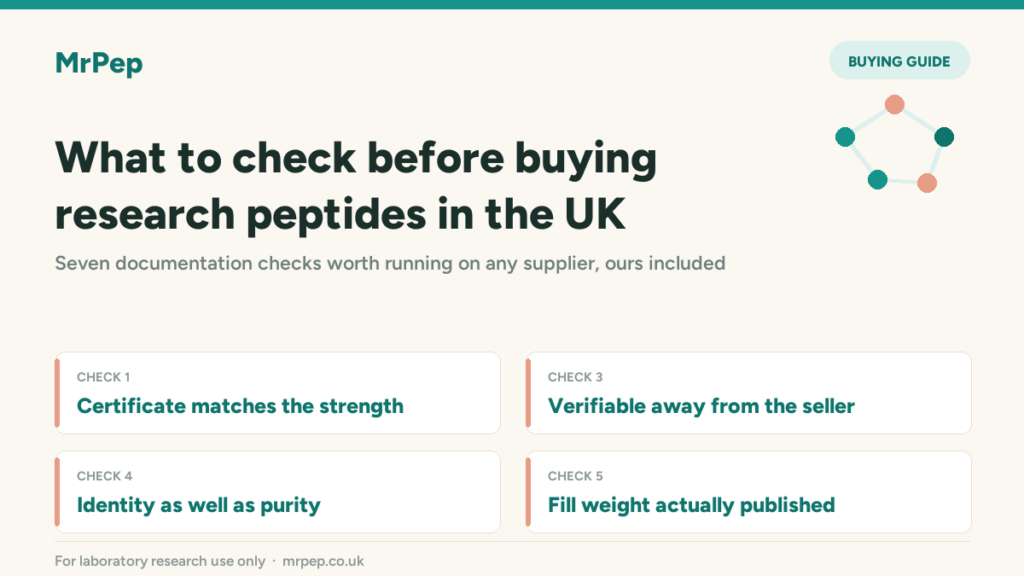
What to check before buying research peptides in the UK
Seven documentation checks worth running on any UK research-compound supplier — including the one almost nobody publishes.

This site supplies research compounds only. Products are not for human or animal consumption.
You must be aged 18 or over to continue.
Plain-English, research-focused guides on how compounds are tested, how to read a certificate, and what's moving through the peptide pipeline. No wellness advice — just the science and the paperwork.
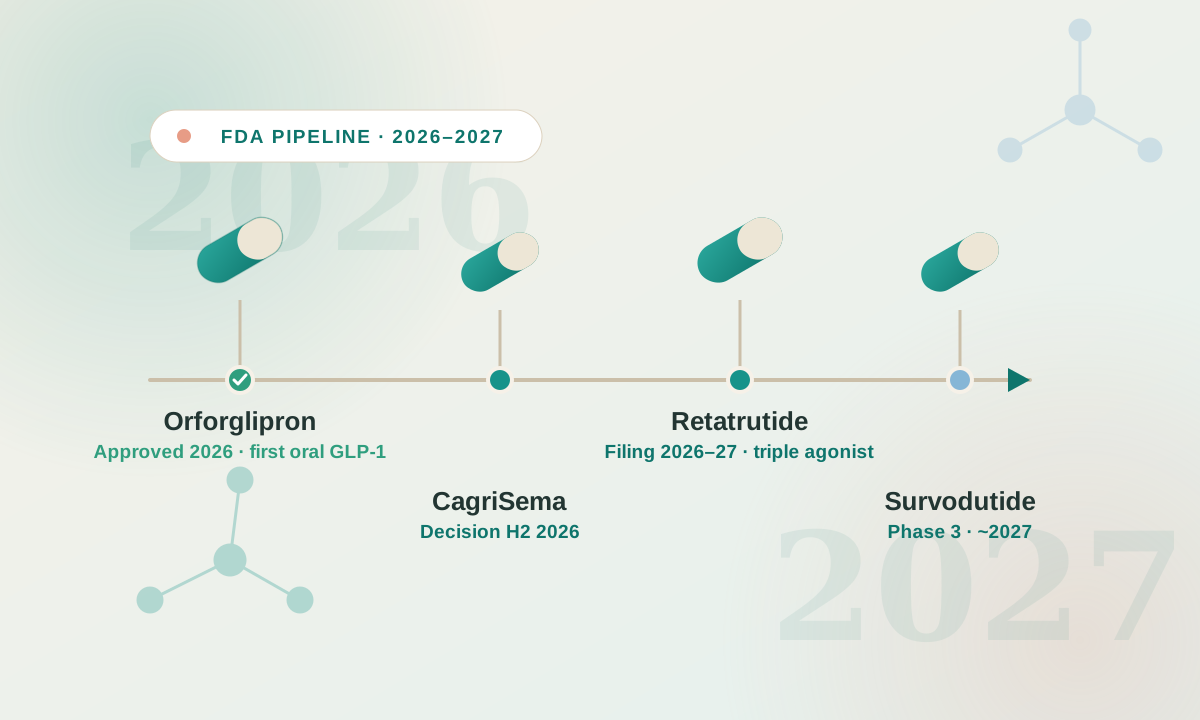
If you follow peptide science, the regulatory calendar is one of the clearest signals of where the field is heading. Peptides are no longer…
Read the overviewSeven documentation checks worth running on any UK research-compound supplier — including the one almost nobody publishes.
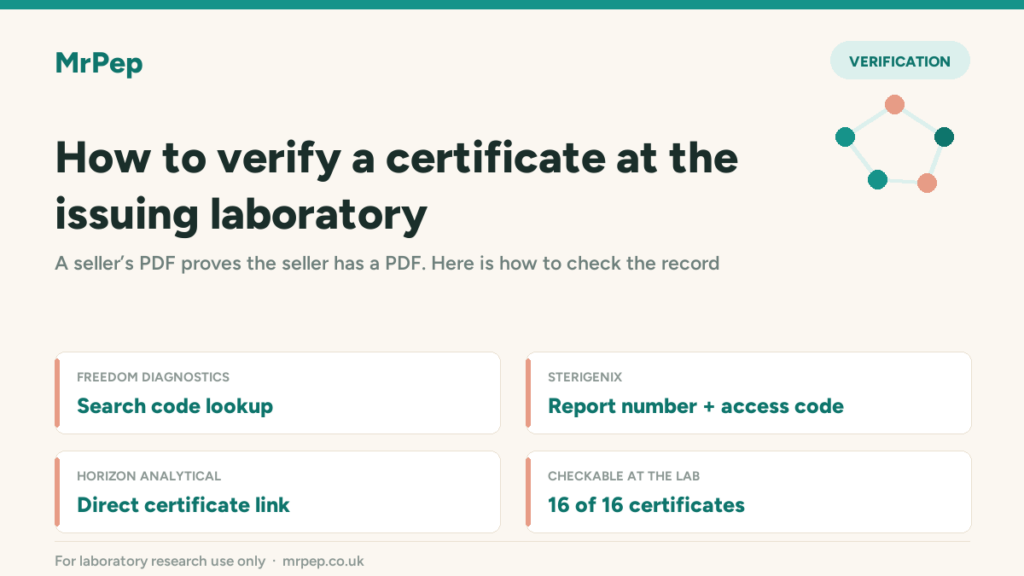
A certificate hosted by the seller proves the seller has a PDF. Here is how to check the same document with the…
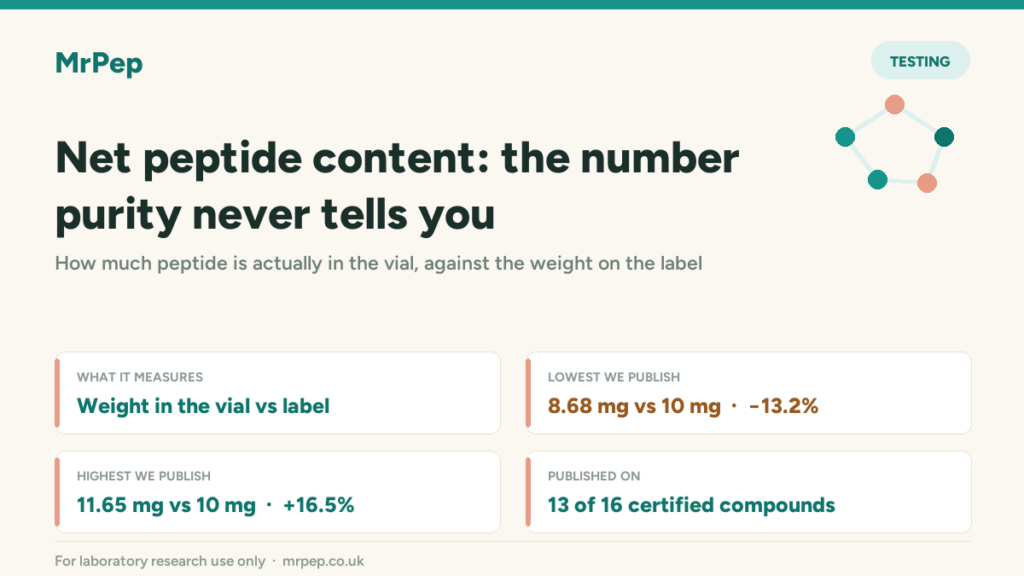
Purity tells you what the material is. Net peptide content tells you how much of it is in the vial — and…
A classification reference for 77 compounds encountered in peptide research, grouped by class, with mechanism and regulatory status for each.
Third-party verification has become the first question serious buyers ask. What HPLC, mass spectrometry and endotoxin testing each actually prove — and…
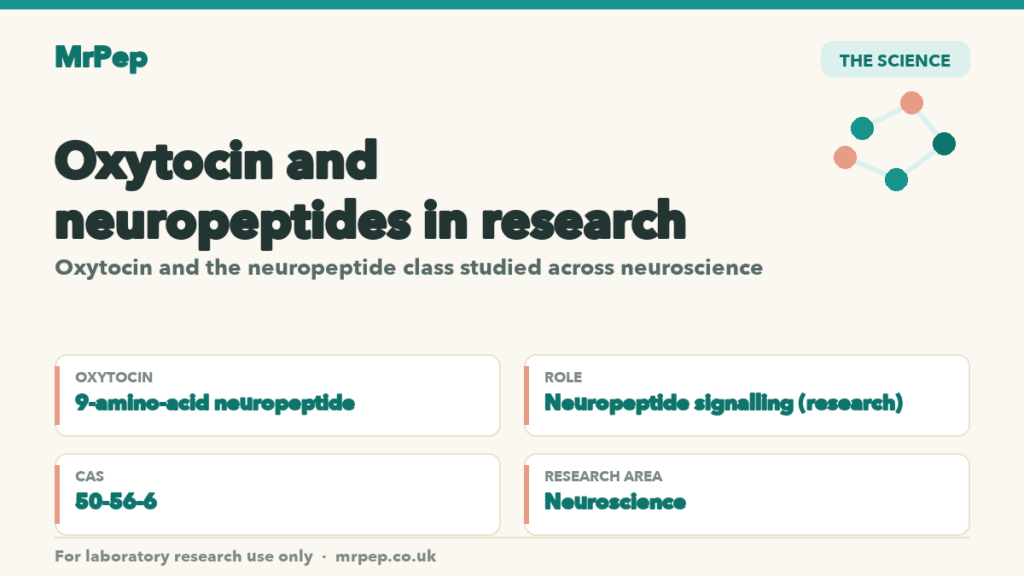
A research overview of oxytocin and the wider neuropeptide class studied across neuroscience.
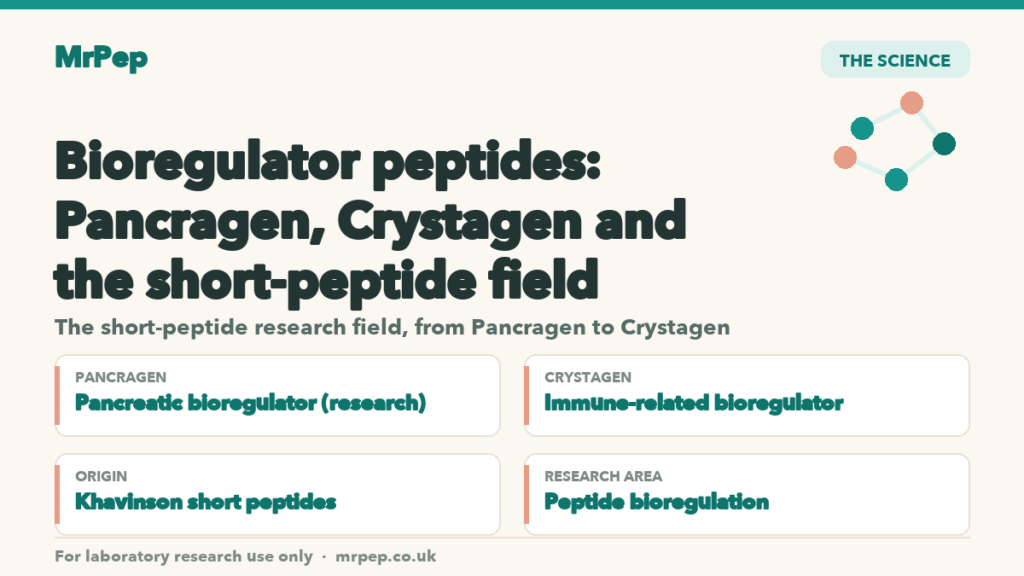
What 'bioregulator' peptides are: an overview of the short-peptide research field, using Pancragen and Crystagen as examples.
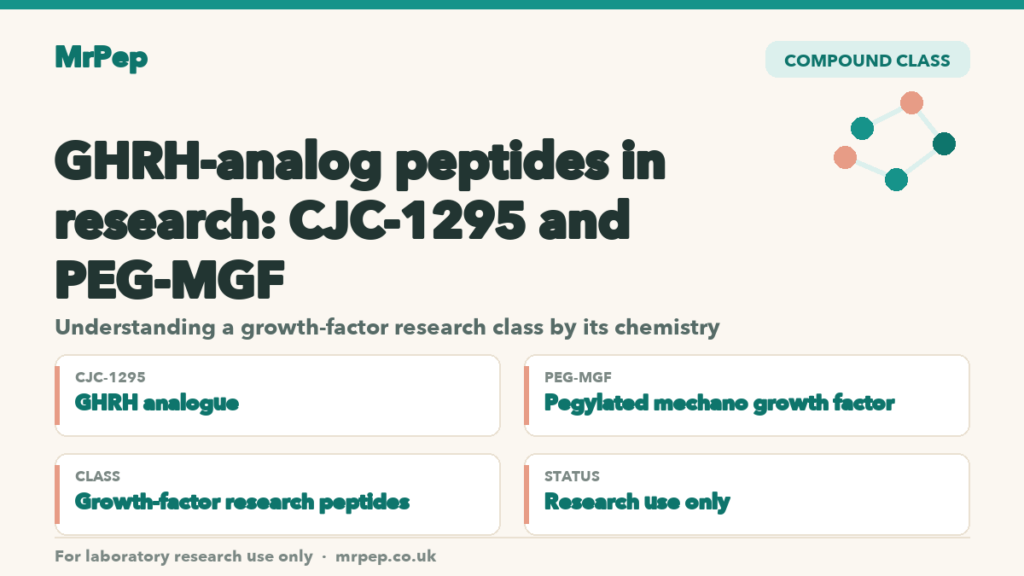
Understanding the growth-factor peptide research class: what CJC-1295 and PEG-MGF are, chemically and in the literature.
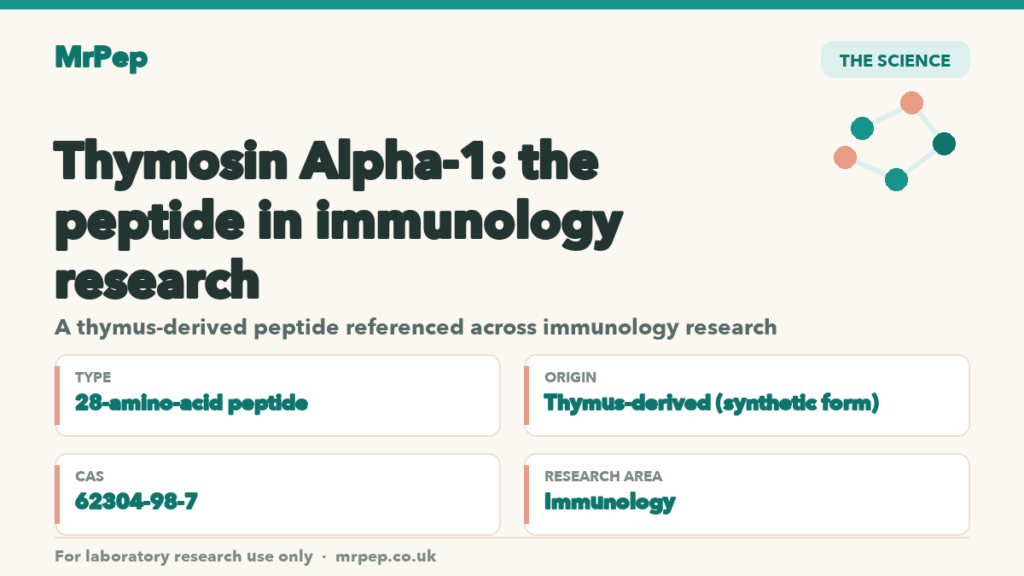
A research overview of Thymosin Alpha-1, a thymus-derived peptide widely referenced in immunology studies.
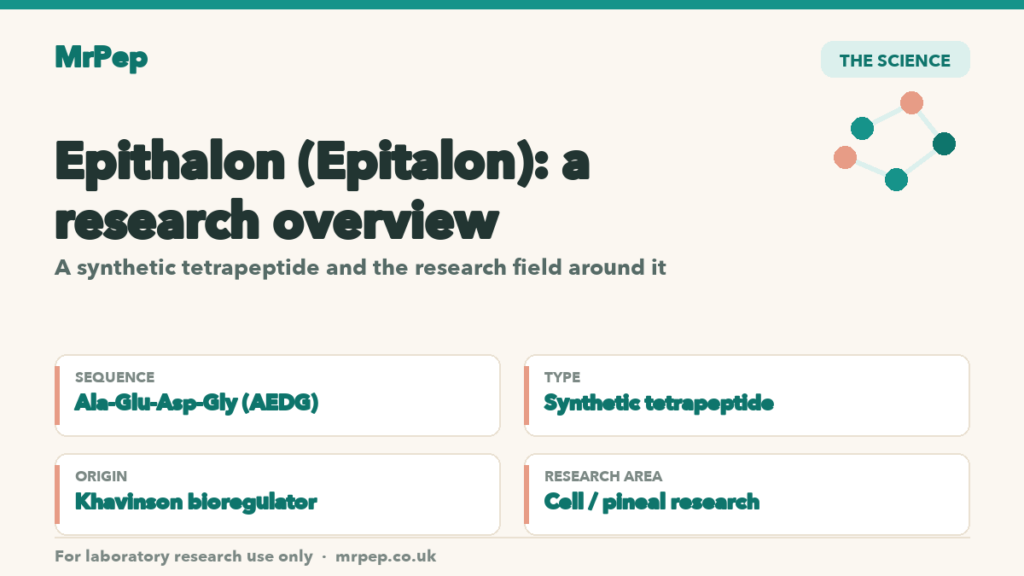
A research overview of Epithalon (Epitalon): a synthetic tetrapeptide and the science that surrounds it.
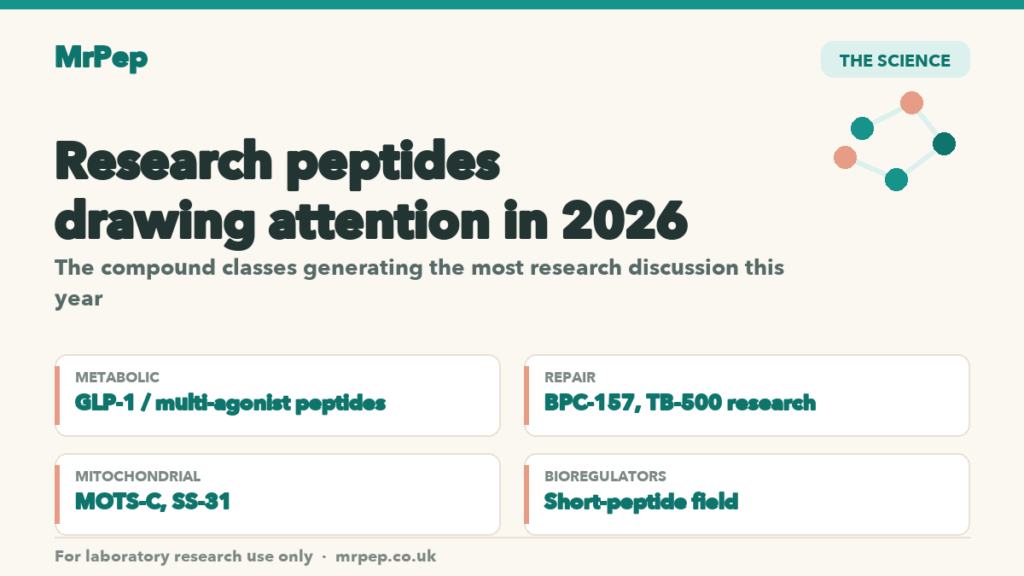
The compound classes generating the most research and regulatory discussion this year — grouped by the science, not the hype.
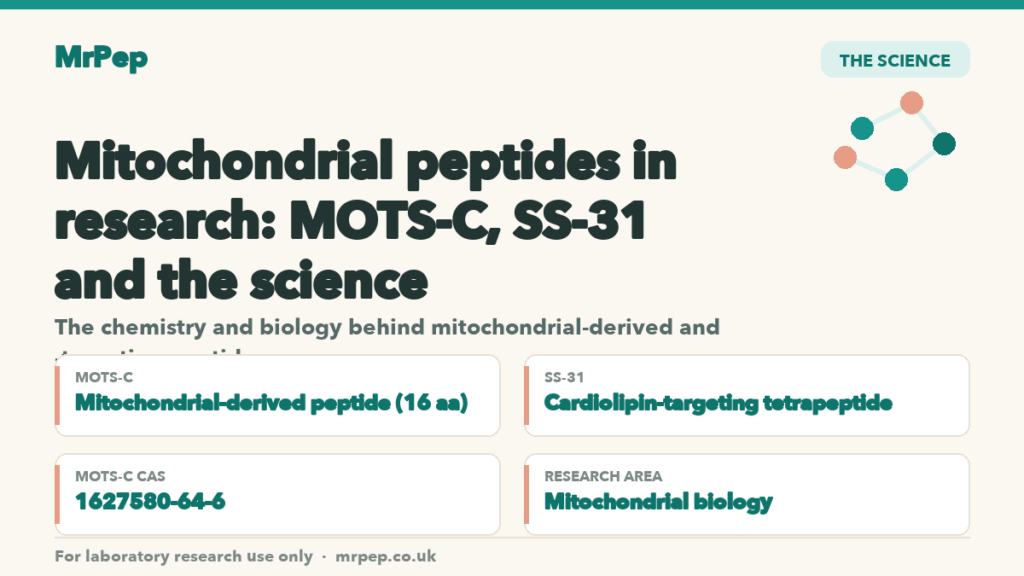
An educational look at the peptides studied in mitochondrial research — what MOTS-C and SS-31 are, and the science behind them.