
Bacteriostatic water vs sterile water vs saline
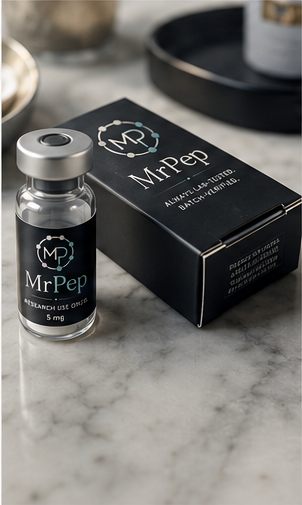
Most research peptides are supplied as a lyophilised (freeze-dried) powder. To work with them in solution they’re reconstituted with a diluent — and the three you’ll see mentioned most are bacteriostatic water, sterile water and saline. They aren’t interchangeable. Here’s what separates them.
Bacteriostatic water
This is sterile water with a small amount of benzyl alcohol (typically 0.9%) added as a bacteriostatic agent. The additive inhibits the growth of bacteria, which means a reconstituted solution can be drawn from a multi-dose vial over a longer period without the diluent itself becoming a source of contamination. In a research setting where a vial is sampled more than once, that stability is the main reason it’s chosen.
Sterile water
Sterile water for injection is exactly that — purified water with nothing added. It contains no preservative, so once a vial is opened it offers no protection against microbial growth and is generally treated as single-use. It’s the simplest diluent, useful where any additive would interfere with a downstream assay.
Saline (sodium chloride 0.9%)
Saline is sterile water with sodium chloride added to make it isotonic (roughly 0.9%). Like plain sterile water it usually contains no bacteriostatic agent. It’s chosen when an isotonic, buffered-ish environment is preferable for the compound or the experiment.
Side by side
| Diluent | Additive | Multi-use? |
|---|---|---|
| Bacteriostatic water | ~0.9% benzyl alcohol | Yes — inhibits bacterial growth |
| Sterile water | None | No — no preservative |
| Saline 0.9% | Sodium chloride | Usually single-use |
Rule of thumb in the lab: if a vial will be sampled repeatedly, bacteriostatic water’s preservative is why it’s the common default. If additives must be avoided, plain sterile water keeps the system clean.
MrPep stocks bacteriostatic water in 3 ml and 10 ml research vials alongside the compound range, so reconstitution material is verified and traceable too.
Research context only. This describes diluents used to prepare research solutions in a laboratory. It is not medical, dosing or administration guidance, and it does not describe or endorse human or animal use of any product.
See how our compounds are tested
Independent HPLC purity and Mass Spec identity data, published per compound.