
Storing research compounds correctly
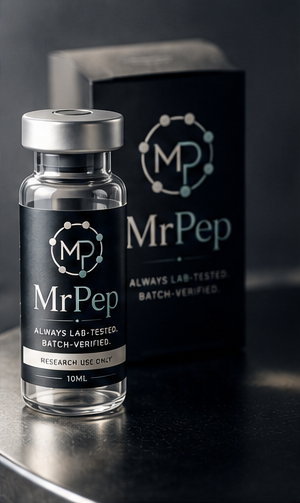
Storage is the least glamorous part of working with peptides and one of the most important. A verified 99% batch can quietly degrade if it’s handled carelessly — and once it does, your data is measuring a moving target. Good storage is really about protecting reproducibility.
Lyophilised (freeze-dried) powder
In its sealed, freeze-dried form a peptide is at its most stable. Kept cool, dry and dark it generally holds up well over extended periods. The two enemies at this stage are moisture and heat: keep vials sealed until needed, let a cold vial reach room temperature before opening to avoid condensation inside, and store away from direct light.
Reconstituted solution
Once a peptide is in solution it’s more vulnerable and its usable window shortens considerably. Refrigeration slows degradation; repeated freeze–thaw cycles are best avoided because they can damage the molecule. This is one reason bacteriostatic water, with its preservative, is a common choice for solutions that will be sampled more than once.
The essentials
| Factor | Aim for | Avoid |
|---|---|---|
| Temperature | Cool / cold, per label | Heat, repeated freeze–thaw |
| Light | Dark storage | Direct sunlight / UV |
| Moisture | Sealed, dry | Condensation, humidity |
| Handling | Minimal, clean technique | Frequent opening of powder vials |
Always defer to the batch certificate and product label. Storage notes there take precedence over any general guidance — including this article.
Every MrPep vial ships with storage notes, and each batch links to its certificate with its own release and re-test dates, so you always know how fresh your material is.
General handling information for research materials in a laboratory. Not medical or usage advice. All products are for laboratory research use only and not for human or animal consumption.
See how our compounds are tested
Independent HPLC purity and Mass Spec identity data, published per compound.