
Mitochondrial peptides in research: MOTS-C, SS-31 and the science
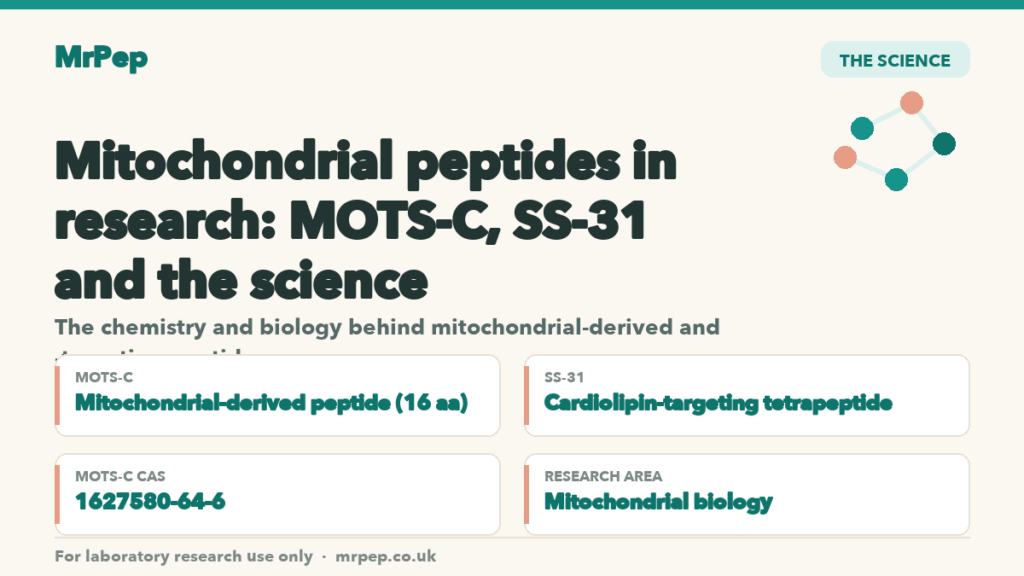
Mitochondria — the energy-producing organelles inside cells — are a major focus of basic research, and a small group of peptides has become central to that work. Two frequently studied examples are MOTS-C and SS-31. This is an educational overview of the science; it is not guidance for use in humans or animals.
MOTS-C: a mitochondrial-derived peptide
MOTS-C is a short (16 amino acid) peptide encoded within the mitochondrial genome. It belongs to a class researchers call mitochondrial-derived peptides — short sequences read from mitochondrial DNA that are studied as signalling molecules in cellular energy research.
SS-31: a mitochondria-targeting tetrapeptide
SS-31 (also written elamipretide in the research literature) is a synthetic tetrapeptide from the Szeto–Schiller series. In studies it is described as associating with cardiolipin, a lipid of the inner mitochondrial membrane — which is why it is referenced in research on mitochondrial membrane biology.
Why they are studied together
Both sit under the umbrella of mitochondrial bioenergetics research, but they are chemically and mechanistically distinct. Grouping them helps researchers frame questions about how peptides interact with mitochondrial pathways. As always, this describes the research field, not any effect in people.
How each peptide is handled in the laboratory
Like our other reference materials, it is supplied as a lyophilised (freeze-dried) powder in a sealed vial. Researchers reconstitute it with a diluent such as bacteriostatic water before use. Every batch is independently verified by HPLC, mass spectrometry and an endotoxin (LAL) screen; see our testing standards or look a batch up on Verify a Batch.
Available from MrPep
Supplied as lyophilised, batch-verified research reference materials (see our testing standards and Verify a Batch):
Related reading
- How research peptides are made
- Purity vs identity in peptide testing
- Research peptides drawing attention in 2026
For laboratory research use only. Not for human or animal consumption; not a medicine, food, supplement or cosmetic. Nothing on this page is medical advice, a recommendation, or a claim of any effect in humans or animals.
See how our compounds are tested
Independent HPLC purity and Mass Spec identity data, published per compound.